Synthetic source
Deterministic 440 Hz + 3.2 kHz tones, seeded noise and three short noise knocks.
-30.00 dBFS RMS · 3 seconds · mono
Actual source · synthetic input · offline render
These audio files were produced by the real Mau Mau dissection and listening-ladder implementation from AssistantApp. Compare the same synthetic sound across its four processing recipes.
Deterministic 440 Hz + 3.2 kHz tones, seeded noise and three short noise knocks.
-30.00 dBFS RMS · 3 seconds · mono
Low, steady outline with clicks removed; the quietest render.
-49.98 dBFS RMS · 3 seconds · mono
Tone and texture, with clicks removed and gentle filtering.
-41.09 dBFS RMS · 3 seconds · mono
Clicks return at reduced strength, with more high-frequency detail.
-35.47 dBFS RMS · 3 seconds · mono
All three separated components, rendered under the same ceiling.
-30.46 dBFS RMS · 3 seconds · mono
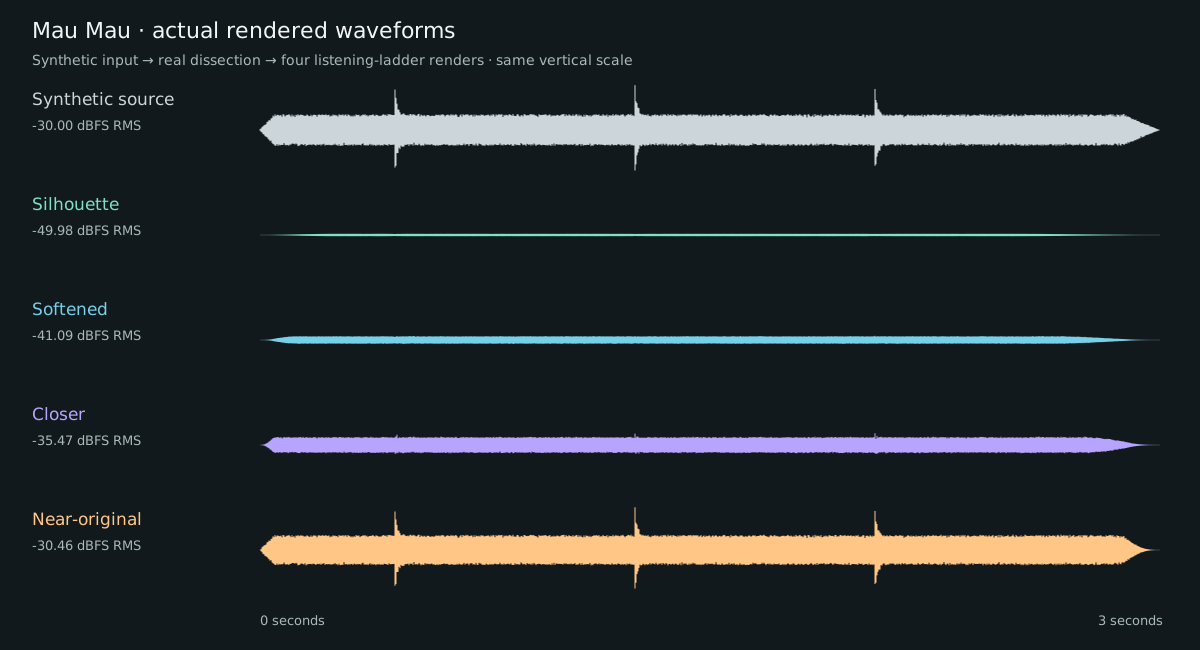
The real STFT and median-HPSS dissection separates tonal, click and texture parts. The real listening-ladder renderer then applies each recipe, filtering, fades and level limits. The source files were compiled without DSP edits in an isolated command-line harness using the existing Accelerate fallback. Source hashes and output measurements are recorded in provenance and engine results.
This is a pre-rendered engine demonstration, not a native app screenshot, live microphone session, full Hum Masker simulation or clinical test. It does not demonstrate room capture, classification, alarms, device calibration or personal recovery outcomes. No private recordings or patient data were used.