entertrainmentExplore the studio ↗
INDEPENDENT RESEARCH & SOFTWARE STUDIO INDEX / 2026

Ideas, made
tangible.

Software for the curious.
Experiments in sound, science and systems.
Built to be explored.

See & hear the projects ↘
FIG. 01 — SIGNAL LANDSCAPE∿
FORM FROM FREQUENCY
A practice between disciplines.Sound / Computation / Investigation↓
FROM THE ACTUAL PROJECTS

Real interfaces.
Real sound.

Step inside Circuit Lab’s native workbench.
Listen to a finished AssistantApp scene.
Explore the work through its own outputs.

ASSISTANTAPP / FINISHED AUDIO DEMO

The Last Light

A lighthouse, three neural performers and a signal in the storm. Hear the dialogue, room placement and layered sound cues in this finished spatial rehearsal scene.

Website playback map from the production manifest; not a screenshot of the app. Positions update at dialogue beats.

Rain, room tone and spatial sound cues

00:56 · Stereo binaural · Headphones recommended

Follow the dialogue / jump to a line
About this recording

Rendered offline on 12 October 2026 using saved neural voice profiles, Voice Designer DSP and Apple’s HRTFHQ spatial-audio graph. This is an all-neural staged production, not a live microphone session or a browser synthesis demo. Room reverb is an approximation. Cast labels describe roles, not guaranteed accents or separate trained identities.

Finished mix: 55.741 seconds, −17.6 LUFS, −1.5 dBTP, according to its retained verification report. Effects include CC0 recordings and licensed Sonniss ambience used within this finished production. Original source recordings are not distributed here.
CIRCUIT LAB / NATIVE ENGINE RENDER

Hear the circuit work.

The same four-second guitar excerpt, before and after Circuit Lab’s offline circuit solver. Listen to the attack, sustain and change in harmonic character.

E1 uncalibrated Fuzz Factory reconstruction · Workbench v0.7 evidence · 4 seconds / 44.1 kHz. Original gains retained: the processed take is louder. This is not a level-matched pedal-fidelity comparison.

The experiment

The archived render uses a connected nonlinear circuit solve at 2× oversampling, with FIR decimation and a monitor output stage. Volume 50%, Gate 0%, Comp 10%, Drive 50%, Stab 100%.

These are real retained engine outputs. The circuit uses synthetic component parameters and has not been calibrated against a physical pedal. Website copies are 16-bit PCM derivatives of the preserved WAVs, with no loudness normalization.

Explore Circuit Lab & Stellar packages ↗
NEW FROM THE STUDIO · 18 OCTOBER 2026

See it. Play it. Explore it.

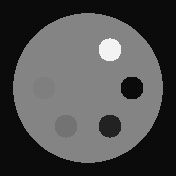
Genuine DICOM backend output of a synthetic CT-number phantom, not a native Lens UI screenshot

A known input. A measured result.

Explore four actual DICOM backend outputs from a synthetic CT phantom. Six HU classes matched the generator. Precomputed viewer; native Lens interface capture remains outstanding.

Open the decoder lab ↗

DICOM Lens project story ↗

A focused instrument for a question

A 12-second silent demonstration of the native Inference Route Explorer. Change a preference, inspect the recommendation, and explore the Library and Focus screenshots.

Screenshots & project story ↗
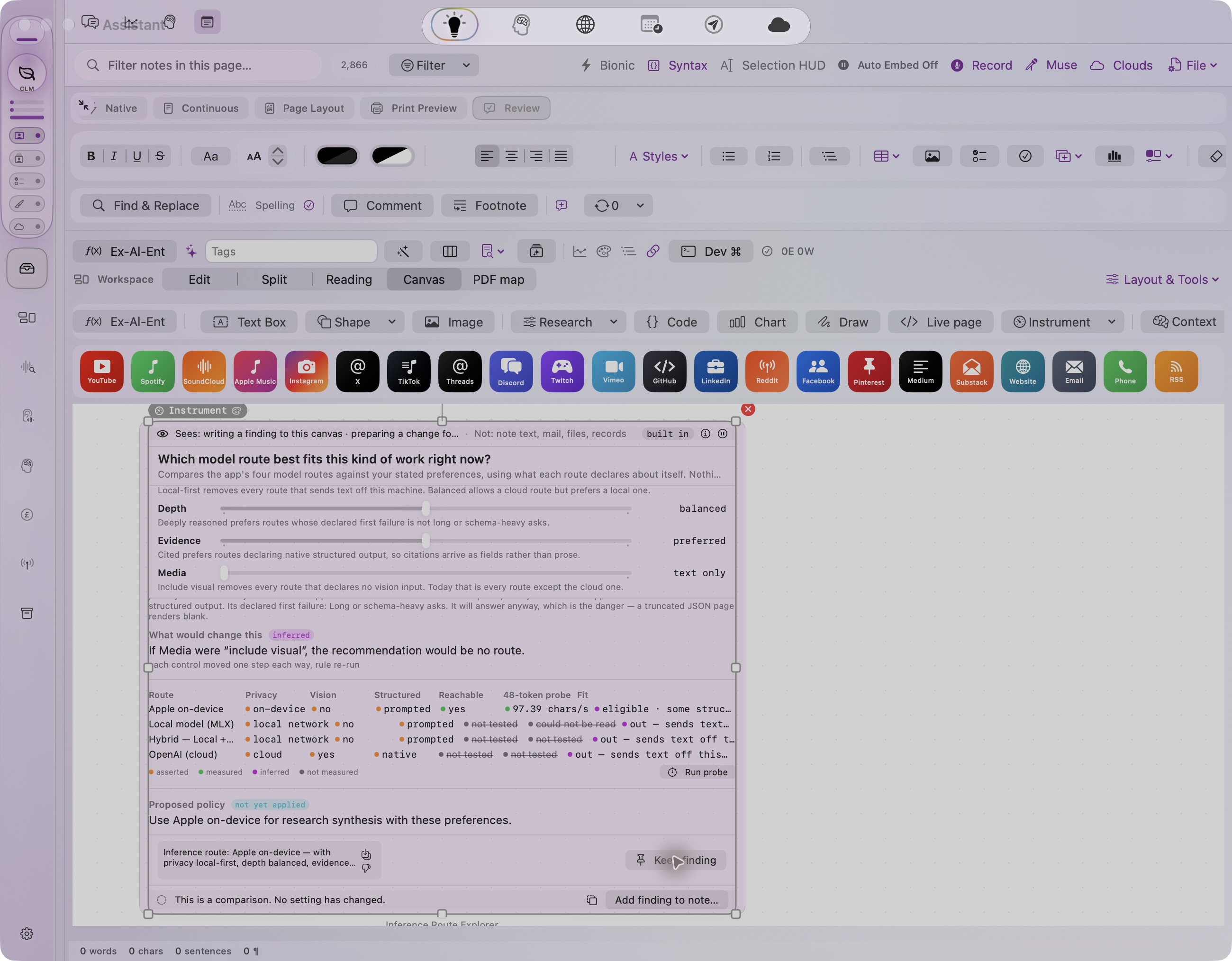
Notes Canvas · real native Inference Route Explorer in a new demo note, 18 October 2026. Recommendations use declared route capabilities. The visible 97.39 chars/s is a retained prior probe record; no new probe was run. Private note library hidden.

Notes become a working canvas

A real native canvas with an embedded Inference Route Explorer, captured from a fresh demo note.

Screenshots & project story ↗
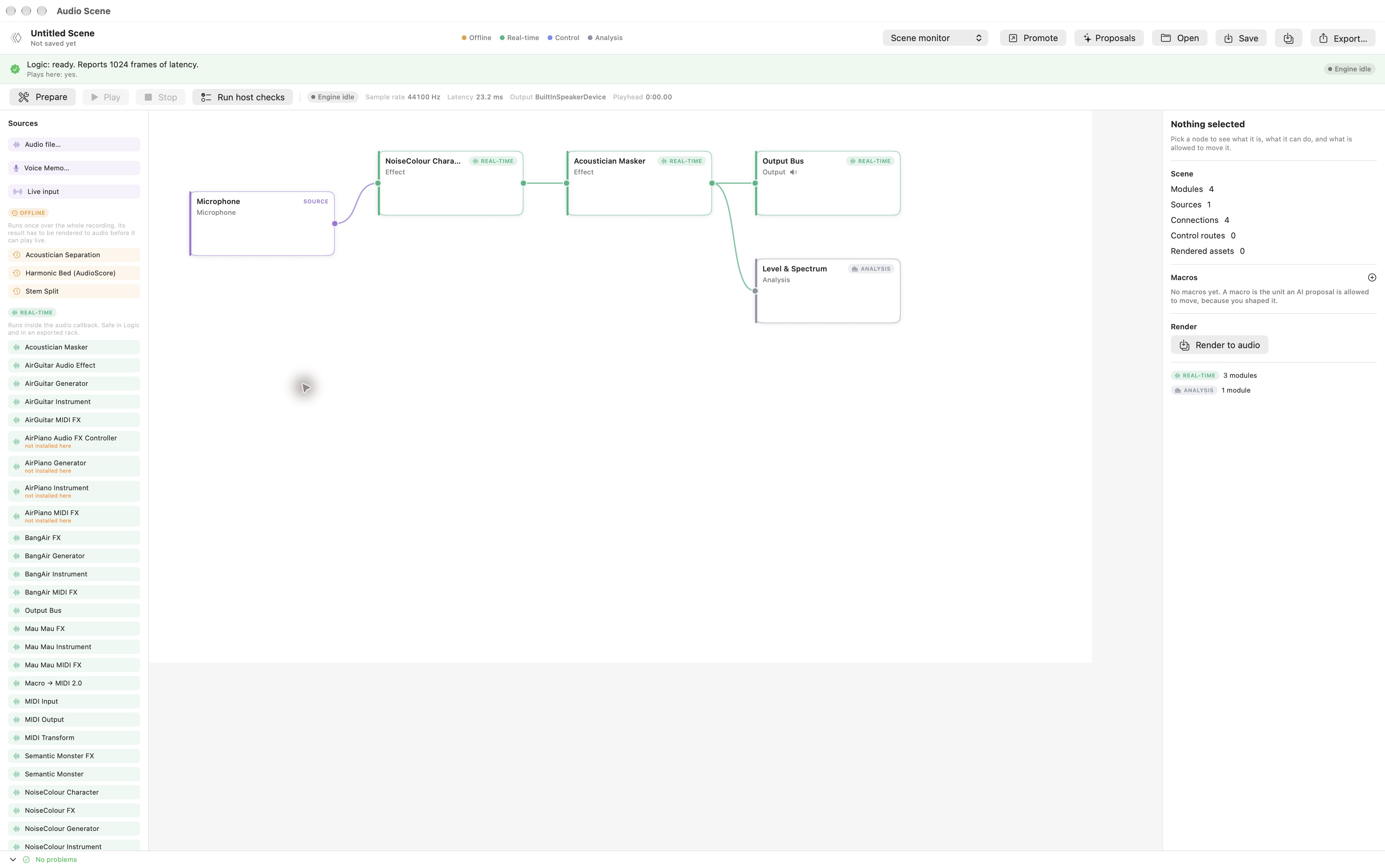
Audio Scene Canvas · real native routing workspace, 18 October 2026. A microphone-source node connects NoiseColour Character, Acoustician Masker, Output Bus and Level & Spectrum. The engine is idle; no microphone was started and no playback is demonstrated.

Inside Audio Scene Canvas

Explore the real native routing graph and module inspector. This capture shows the engine idle; audio playback and export are not demonstrated.

Screenshots & project story ↗

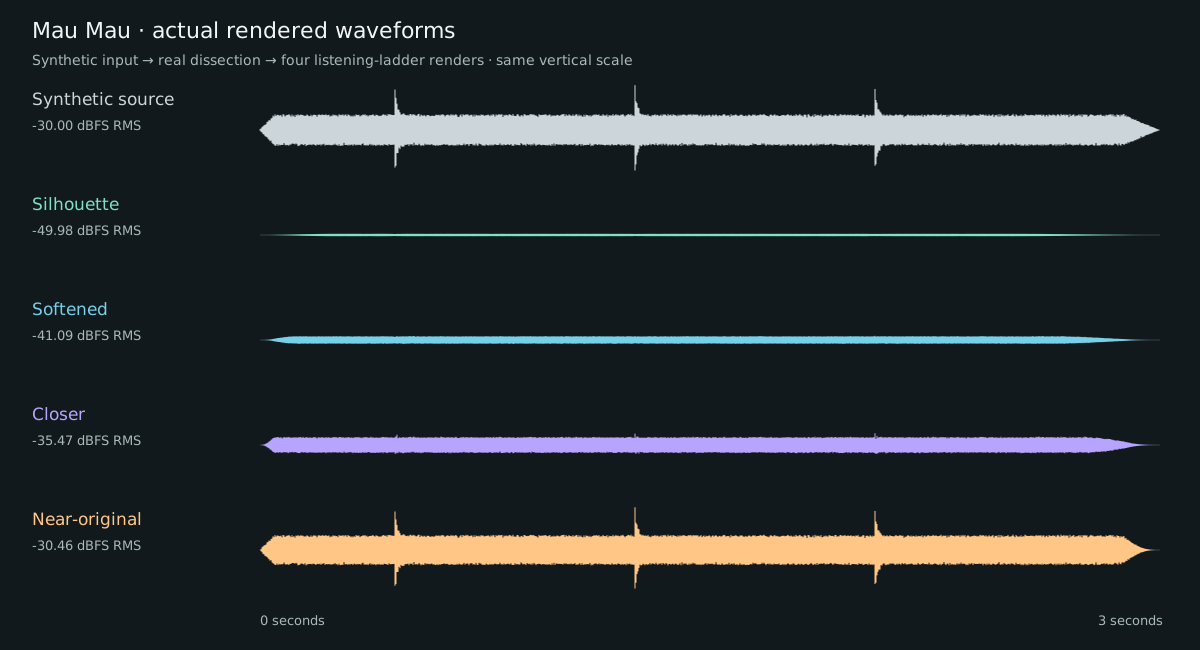
A 909 bounce, taken apart

Audio comparison · 34.65 seconds. Eleven supplied kit references guide experimental separation. Native captures with a soundtrack from actual exports; estimates can contain bleed.

Screenshots & project story ↗
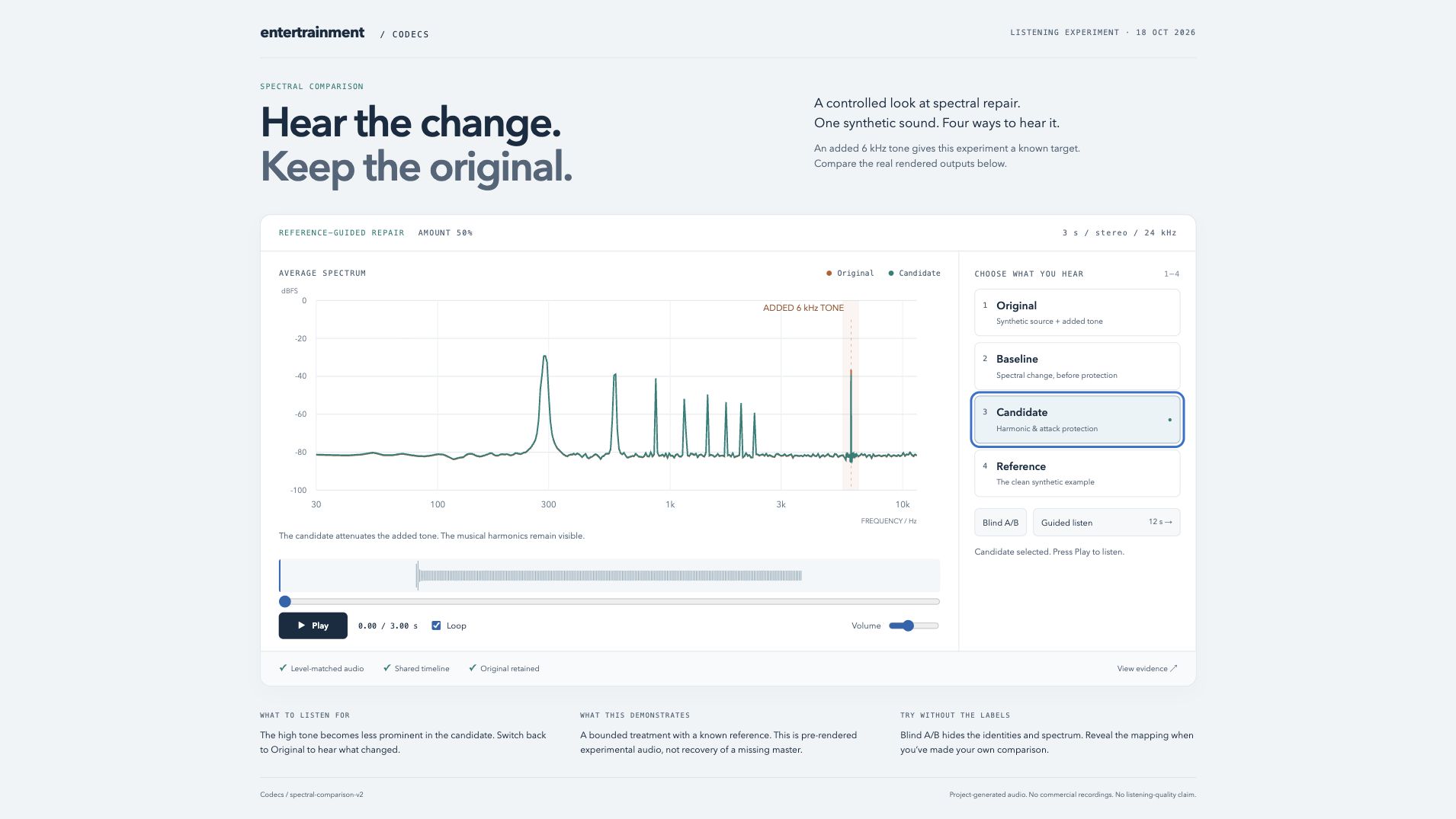
The working spectral comparison web player with four listening variants

Hear the spectral comparison

Four real renders. One shared timeline. Try guided listening and blind A/B on a controlled synthetic example.

Launch listening demo ↗
INSIDE THE WORK

The stories behind the projects.

From the question that started it to the tools taking shape. Read detailed project biographies, explore their connections, and see what is working and what comes next.

Explore project stories ↗
SOUND, MOVEMENT & ADAPTIVE SYSTEMS

Listening. Moving.
Responding.

Explore the systems through their own outputs.
Hear the sound. Inspect the decisions.
Follow the evidence behind each experiment.

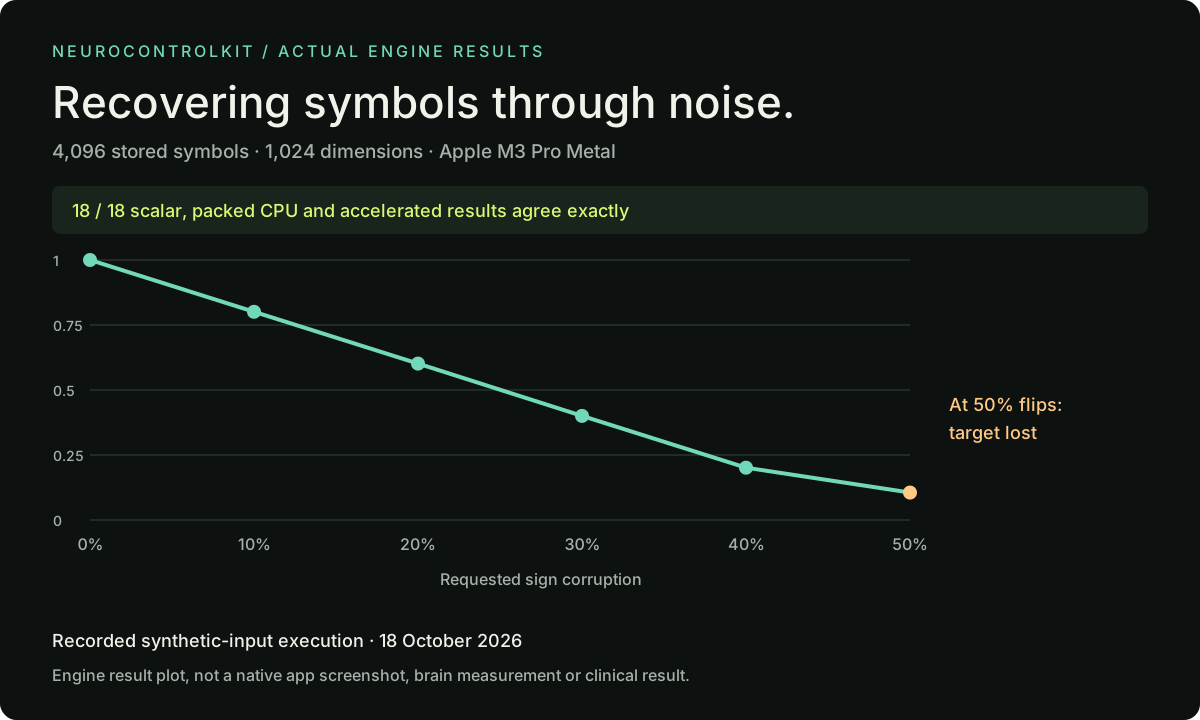
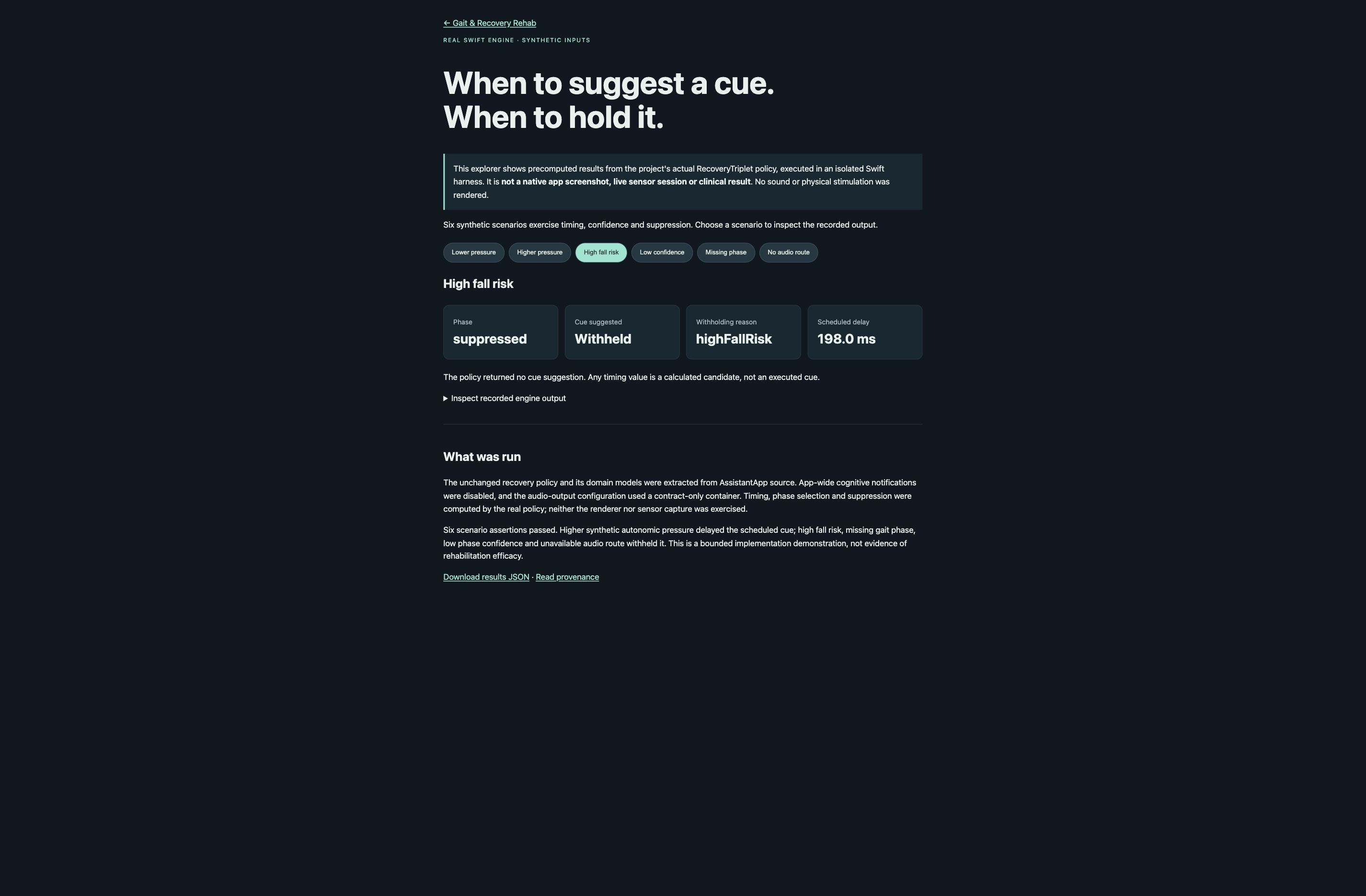
Research demonstrations with their scope stated beside the media. Engine outputs and browser explorers are distinct from native app captures; synthetic scenarios do not establish clinical outcomes.

01 / SELECTED WORK

Different questions.
One restless curiosity.

From listening closely to looking deeper.
A collection of software projects that turn
complexity into something you can work with.

THE CONNECTED ESTATE

More than individual apps.
A whole world of building blocks.

Native applications above.
Reusable libraries underneath.
One connected research practice.

THE RESEARCH ENVIRONMENT

AssistantApp

A modular macOS environment spanning semantic graphs, creative tools, voice, imaging, code intelligence and adaptive interaction. A place for these different disciplines to meet.

The package library

Selected local libraries and research families. Open an entry to explore its role.

A source-informed selection, not a release catalogue. Local packages are shown as research and development work; availability and maturity vary.

02 / THE PLAYGROUND

Less watching.
More trying.

A small window into the thinking behind the work.
These standalone browser experiments run locally
on your device. Choose one and get hands-on.

SOUND / SYNTHESIS EXPLORER

A little change.
A different character.

Turn a simple waveform into something you can hear. Adjust the frequency and shape, then press play.

Synthesised tone · starts quietly · no microphone access

OSCILLOSCOPE / TIME DOMAIN
220 Hz · SINE WAVEVISUAL PREVIEW
03 / THE APPROACH

Curiosity starts it.
Craft makes it useful.

entertrainment is an independent software and research practice working where creative tools meet technical depth.

The common thread is simple: make hidden behaviour easier to see, hear and understand. Follow an interesting question, build something tangible, then test what it actually does.

01

Make it explorable.

Interfaces that invite experimentation. Controls you can feel. Results you can inspect.

02

Keep the evidence close.

Separate what is measured from what is imagined. Let the work show how it reaches a result.

03

Cross the boundaries.

Audio informs computation. Signals inform investigation. The most interesting ideas travel.

KEEP EXPLORING

Follow your
curiosity. ↗

Step inside a project.
Find the question that interests you.

Explore SemanticCompute ↗Find entertrainment on GitHub ↗